Showing posts with label remembering. Show all posts

Tuesday, November 7, 2023

Prepare for what happens to you when you write your memoir


Prepare to choose courage over cowardice when the remembering and writing hurt.


Prepare to be surprised and delighted when you peel off layers surrounding your past experiences.


Prepare to find God’s fingerprints all over everything.


Prepare to discover links, insights, and joys.


Prepare to unravel your life’s mysteries (or at least some of them).


Prepare to make better sense of your life.


Prepare to feel good about it.


Tuesday, March 21, 2023

Back to Basics: Your stories are all around even if you don’t recognize them


Your stories are everywhere, all around you, just waiting for you to put them in writing.


Look at your cell phone contact list, your address book, email inbox, friends on Facebook and other social media. What stories can you write about the fun you had with them? About the adventures? What skills did those people teach you?


Go deeper: What did you learn alongside them about failure, hard work, success, romance, illness, teamwork? What lessons did they teach you?


Think back: Who taught you about honesty, integrity, perseverance, kindness, compassion, generosity, faith in God? How, specifically, did those individuals shape you and encourage you to be the person you are today?


Stories are everywhere—not just stories. God-and-you stories.


 Look around your office or your house. What have you tucked into a special drawer or a safe deposit box?


If a tornado siren sounded, or if a smoke alarm went off, what would you grab and take to a safe place?


If those items could talk, what stories would they tell?


I think about that question a lot.


Someday I want to write stories based on my old blue American Tourister carry-on bag. It traveled with me for thirty years across three continents: from this planet’s most primitive places to the world’s most sophisticated cities. What stories it could tell!


What stories would my husband’s grandmother’s aluminum colander tell? And her ironing board? I don’t know how many years Grandma Jennings used them, but I’ve used them for more than fifty years! Five generations of our family (so far) have used those items. Imagine what stories they could tell—stories of God’s goodness to our family, generation after generation.


Why have you thrown out some possessions 

but kept others for many years?


Why could you never throw them out or give them away? 

Because they represent something important to you. 

What is that something?


Look around and ask yourself:


“If this dining room table could talk, what stories would it tell?”


“If my old Bible could talk, what stories would it tell?”


“If these boots could talk, what stories would they tell?”


What about a photo? A book? Washing machine? Piece of art? Jewelry? Woodworking tools? Coffee mug? Mechanical tools? Art supplies? A vase? A favorite old devotional book?


Many items could tell stories—stories significant to you and your family.


Glenda Bonin suggests we interview key people—and even ourselves.


“Don’t be timid about interviewing yourself and others,” Glenda writes. “A good interviewer asks questions and waits for answers. . . . Listen deeply, allowing as much time as needed for quiet moments of thought. Do not rush in with a new question until you are satisfied that the question has been fully explored. . . . These moments are often where the best family stories can be found. . . .”


I like Glenda’s suggestion: Interview others, yes, but also interview yourself, and “listen deeply, allowing as much time as needed. . . .”


You might even schedule a time to think, to ponder an item’s importance. Or maybe you could contemplate while you drive to work or mow the lawn or walk the dog.


What questions do you need to ask?


What questions do you need to ask yourself?


Peel back layers. 

Wait for answers. Listen for them.


When answers surface, write your stories—

not just stories. Write God-and-you stories.


Remember, while you’ve been using and enjoying those items, God has always been with you, working in you, working on your behalf.


You don’t need to experience news-making miracles to witness God at work. He is in your everyday comings and goings.


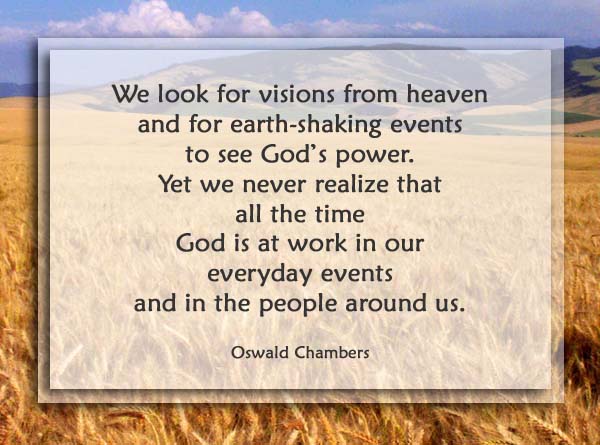
As Oswald Chambers says,


“We look for visions from heaven

and for earth-shaking events

to see God’s power. . . .

Yet we never realize that

all the time God is at work

in our everyday events

and in the people around us.”


Write your stories!


Tuesday, January 3, 2023

Are you too busy to write?


Life has been busy, busy, busy for the past few weeks, and I suspect you haven’t had time to write your stories.


But that’s not a problem.


Why not?


Because your brain and heart

are working even when you don’t have time

to sit down and get serious about

working on your memoir.


Christmas is a time of remembering. So many memories pop into our heads at this time of the year. If your memoir will include a vignette about Christmas, you’ll like today’s post.


What memories came to mind when you put decorations on your Christmas tree? Do you have ornaments that used to be your grandmother’s? Decorations you made as a child? Or that your kids made when they were little?


What memories came to mind when you sang Christmas songs at church, or when you watched your favorite old Christmas movie, baked a recipe from your childhood, or watched kids or grandkids perform in a Christmas pageant?


When you have a spare moment,

jot down a few key words and images

that will help you remember

those details later.


As George W. Carver said, "Do what you can, with what you have, and do it now."


For now, don’t worry about

composing a well-written vignette

for your memoir.

A few hurried notes to yourself

will be a big help later

when you compose

your detailed, polished stories.


Happy New Year!


Monday, June 6, 2022

Don’t miss the significance of everyday people and events


Often we memoirists think we should focus on the big incident, the momentous scene, the shocking episode—and they are important—but look for the treasures, perhaps hidden right now—within the everyday events and individuals in your past. They could hold more importance than you realize.


Oswald Chambers said, "We look for visions from heaven and for earth-shaking events to see God's power. Yet we never realize that all the time God is at work in our everyday events and in the people around us."


In writing your memoir, be deliberate: Make time to relive your experiences. ReflectExplore and examine the ways God was at work in your everyday activities and the people who surrounded you.


What was He doing?

What was He working out?


How did those events and people transform your life’s direction?


How did they change the end of your story?


And there you have it, your Tuesday Tidbit.


Happy writing!


Tuesday, March 22, 2022

When remembering troubles our hearts


By now you recognize how important remembering is when writing a memoir.


Reflectingexamining the past, discovering deeper significance than you recognized at the time.


Remembering and analyzing and piecing together can bring deep healing—and might even change the direction of our lives.


Reflecting on what God has done for us and through us can be life-changing.


Sometimes, however, our introspection

leads to painful memories, regrets, shame.


Our hearts become troubled.


You know what a troubled heart feels like.

So do I.

Sometimes it hurts for a long, long time.


And yet, Jesus said, Don't let your hearts be troubled (John 14:1).


Lloyd Ogilvie offers us this consolation and hope: “We have a place to go with our troubled heartsthe heart of God.


God’s heart is “a place of reconciliation, forgiveness, and acceptance. . . . We were created to abide in His heart of love. . . . An intimate communion awaits us where we can unburden all our troubles and receive strength.” (Lloyd Ogilvie, Silent Strength for My Life)


Take in Henri Nouwen’s words: “We are people with souls, sparks of the divine. To acknowledge the truth about ourselves is to claim the sacredness of our being, without fully understanding it.” Nouwen says we must “trust that our souls are embraced by a loving God.” (Bread for the Journey)


Nouwen continues:


Solitude, silence, and prayer . . .

offer solutions

for the complexity of our lives . . .

because they bring us in touch with

our sacred center, where God dwells. . . .

It is the place of adoration, thanksgiving, and praise.”


May God bring healing to our painful memories

and our troubled hearts,

and may we rejoice in Him

as we dwell in that lovely place in His heart.


Tuesday, January 18, 2022

Tuesday Tidbit: Your memoir’s all-important takeaways


People will read your memoir for its takeaways.


What’s a takeaway?


It’s a gem you unearthed during all your remembering and reflecting that’s so important in writing a memoir. (Be sure to read our earlier post, “Dig out the gems, in pieces if you must.”)


In examining what you unearthed, and in re-evaluating it, you gained clarity and wisdom, and that helped make sense of your lifewhich you offer to your readers.


Takeaways are what readers “take away” from your memoir. A takeaway is a meaningful sentence or two that speaks to something deep inside the reader.


He recognizes himself in your story. When he stumbles upon your takeaway, he will pause to think, to re-read the words, slowly. He might underline the passage. Or maybe highlight it. Or write notes in the margin. Your memoir’s takeaway offers him lessons he will carry with them after he’s read the last page and closed the back cover.

How do you, the writer,

discover a takeaway in your life’s story?


Think back. At some point,

you had an A-ha moment, and a light came on.

Puzzle pieces began falling into place.

You gained clarity.

You discovered a solution.

It was a turning point.

You were not the same person after that.


That’s good, that’s exciting.

Such discoveries can be defining moments for you,

life-changersbut go beyond that.

Share the benefits of that experience with your readers

by crafting a takeaway.

Offer them their own A-ha moment.

Offer them something of value.


In other words, in a concise way give words to the principle you learned—think of the takeaway as a precept, a saying, a guideline, an adagesomething readers can live by, a principle that can be life-changing for them, too.


Use your takeaway to offer readers hope,

or wisdom,

or courage,

or laughter,

or a solution,

or a new way of living or loving.


Your takeaways, then, communicate to readers: “I know this is true because I have experienced it, I have lived it. It changed my life. Perhaps it will change your life, too.”


Come back next week when we’ll continue working on takeaways.


There you have it, your Tuesday Tidbit.


Tuesday, September 7, 2021

Refuse to take the lazy route


Chuck Swindoll writes about “people who go through life with their eyes closed. They look but don’t really ‘see . . . they observe the surface but omit the underneath . . . they focus on images but not issues . . . vision is present but perception is absent. . . .


“Remove insight,” Chuck continues, “and you suddenly reduce life to existence with frequent flashes of boredom and indifference. . . . Please understand, I do not mean to be critical of those who cannot go deeper . . . but of those who can but will not.”


Chuck concludes: “Open your eyes! Think! Apply! Dig! Listen!” (Charles R. Swindoll, Growing Strong in the Seasons of Life)


Chuck’s message is perfect for those who write memoirs.


Many a time you’ve heard me emphasize the importance of introspection and reflection when it comes to writing a memoir. Of digging deeply.


But it’s hard work to make time for all that contemplating and assessing.


And all too often we’re in a hurry to get our stories in print.


However, I urge you to do what Chuck says: “Open your eyes! Think! Apply! Dig! Listen!so that you can write multi-layered stories based on not only what happened, but what it all means—what you learned and where it all led.


What do you recognize now that you overlooked in the past?

What do you know now that you didn’t know before?


And this is so important: What was God doing?


What new places did God take you—

emotionally, physically, mentally, spiritually?

In hindsight, what new opportunities did He give you?

What lessons did He teach you?

How is your relationship with Him different now?


Sit quietly with your story and imagine God sitting there beside you. He’s eager to help you dissect your past and make sense of it.


Listen for what He might tell you. Watch for what He might show you.


Often He surprises us with what He helps us piece together. What new person are you now as a result of your past experiences and your examination of them?


If you want to uncover the profound parts of your story,

you need to invest in reflection and introspection.

Go deep. Refuse to stay in the shallow end.


“Oftentimes insight into what all has transpired comes later and in layers,” writes Beth Moore. “One of the many gifts of aging in a walk with God is that you can look over your shoulder and see that some pieces of the puzzle really did end up fitting. Yep,” she says, “this makes sense. Surely didn’t at the time.”


As a memoirist, then, your job is to recollect, reminisce, identify, contemplate, review. And snap puzzle pieces together.


Beth Barthelemy asks herself

and we memoirists would do well to ask ourselves

Am I willing to sit in silence

highly uncomfortable for those of us who are new to it

in order to hear the voice of God?


Tuesday, August 31, 2021

“Count your blessings backward”


Sandra Clifton was desperately in need. In her discouragement, she cried out to God, “Are You there?”


Sandra seemed to hear God answer, “Count your blessings—backward!


Think about that! Count your blessings—backward!


And so she did—Sandra began to examine her past, to remember what God had done.


In doing so, she discovered God had been guiding and providing for her even though she hadn’t detected it.


“I realized what God wanted me to understand: that He had been at work all along, setting up circumstances to bring His will to pass in my life. Recalling previous blessings and answered prayers reminded me of this truth. It is what David meant by ‘encouraging himself in the Lord.’


Sandra continues, “Tracing our blessings backward shows us the ‘pattern’ of God’s involvement in our lives. It allows us to see that the very obstacles we face today could be the things that set us up for His blessings tomorrow.”


“Today’s blessings are a result of the Father’s masterful orchestration of people and events,” she points out.


Sandra’s message is a glorious one, 

and it’s also what writing a spiritual memoir is all about.


We memoirists devote ourselves to remembering what God has done in the past. “‘Remember’ is the most frequent command in the Old Testament,” writes Mike Metzger.


We examine what happened in the past, we ponder, we take a broader, wider, deeper, higher look.


We search for God’s fingerprints.


We look for patterns in our lives.


We reflect in a deliberate way.


We connect the dots.


We trace our blessings backward

What a superb, blessed experience that can be!


What do you need to remember today?


Think back on your conversations with God—and write about them.


Remember how He confirmed His direction for your life—and write about it.


Remember what you committed to Him, remember the Bible verses that inspired you to make that commitment—and write about all that.


Remember your joy in setting out—and write about it.


Remember all the ways God walked hand in hand with you when you stumbled through rough spots, through dread-filled times, through your anguish—and write about it.


Remember raising your hands in surrender to God, trusting Him for His best outcome for your life—and write about it.


Remember the ways He brought you to a new and good place—and write about all of that.


And take joy in your writing!


Tuesday, April 20, 2021

How can you retrieve your faded memories?


Writing your memoir can surprise you by bringing past events into a new light. As you make time to remember and ponder, new insights into old experiences will surface. Puzzle pieces will fall into place.


Frederick Buechner explains what he discovered when he penned his personal stories in The Sacred Journey and Now and Then.


"They gave me more of a sense than I had ever had before of how as far back as I could remember things had been stirring in my life that I was all but totally unaware of at the time.


"If anybody had predicted when I was an undergraduate at Princeton that I was going to be ordained as a minister ten years after graduation, I think I would have been flabbergasted.


"Yet as I wrote . . . I found myself remembering small events as far back as early childhood which were even then leading me in something like a direction but so subtly and almost imperceptibly that it wasn't until decades had passed that I saw them for what they were. . . .


"The events were often so small that I was surprised to remember them, yet they turned out to have been road markers on a journey I didn't even know I was taking.


"The people involved in them were often people I had never thought of as having played particularly significant roles in my life yet looking back at them I saw that, for me, they had been life-givers, saints." (Frederick Buechner, Originally published in Telling Secrets)


God longs for us to remember what He has done (Psalm 105:5), but we so easily forget!


Memories are vital components of memoirs, so how can we retrieve the faded ones?


If you kept a journal in the past, you have a treasure. It will be packed with events and details and personal insights that you might have forgotten over the years.


Old letters—that you wrote or received—can also help remember significant events and people.


Look through your Bible, devotionals, or Bible study materials. If you’re like me, you’ve jotted memories and dates in the margins.


Some people print and save special emails they’ve sent or received.


Here’s another idea to help you retrieve your memories of a key place: Sketch a floor plan and/or the neighborhood. Maybe you’re writing about your childhood home or about Boy Scout camp. Or maybe you’re writing about an office building in a bustling city. Sketching that place will help remember details.


While you draw, memories will bubble up and percolate.


Don’t believe me? Give it a try! As you sketch, jot down notes about who was with you and what significant events took place there.


But that’s just the beginning!


Memoirists go beyond remembering the past. Memoirists search for significance. Relevance.


Pondering, unraveling, piecing together, reflecting—all are necessary ingredients in memoirs. Tell readers what you now see, in retrospect. Look for deeper meanings and connections, as Frederick Buechner did, above.


Looking back, what did you learn about yourself?


What patterns did you discover that you hadn’t noticed before?


How did the place and people shape your life? And prepare you for your future?


Maybe, like Buechner, you'll notice that you'd been on a journey you didn't even realize you were taking.


What was God doing? What did you learn about Him? Like Frederick Buechner, did you discover God’s purpose for your life?


When you pull your memories out of hibernation, give yourself plenty of time to examine them and answer the above questions.


Look for relevance you might have missed in the past.

Search for profound lessons you learned.

Notice defining moments and turning points.

Make time to discover insights.

Identify healing and blessings that were there all along.

Uncover your richer, higher, deeper, wider story.

And then share it with others.


Tuesday, March 16, 2021

When you follow God’s breadcrumb trail and listen for “a deeper sound”


When we start writing, we have no idea where our memories and ponderings will take us. 


The process of crafting a memoir changes the way we hear.


It opens our eyes.


It helps us discover a higher, deeper, broader story.


And the process of writing changes our hearts.


“The written word

preserves what otherwise might be lost

among the impressions that inundate our lives.

Thoughts, insights, and perceptions

constantly threaten to leave us

before we have the opportunity

to grasp their meaning.

Writing can keep technology-driven, fast-paced,

quick-fix, ambiguity-intolerant modern life

from overpowering us—

and give us something palpable upon which to reflect.


Reflection slows matters down.

It analyzes what was previously unexamined,

and opens doors to different interpretations

of what was there all along.

Writing, by encouraging reflection,

intensifies life.”


(Editors Ben Jacobs and Helena Hjalmarsson,

The Quotable Book Lover)


Think back to a time when the unexpected happened, something scary or challenging or disappointing. Or maybe it was downright tragicheartbreaking, life-changing.


One time—only one time, I’m sad to say—when something devastating happened, almost immediately Romans 8:28 came to mind: “And we know that all that happens to us is working for our good if we love God and are fitting into His plans” (The Living Bible).


I told myself that ultimately I’d recognize the good God could bring from the tragedy. I told myself to watch God work. I couldn’t imagine what those blessings might be—those lessons, insights, and opportunities to mature, gain wisdom, and grow in faith—so I waited and watched. And sure enough, He did bring beauty from ashes.


I wish that every time hardship blindsided me, I’d have watched for the goodness He worked, but I admit I rarely have.


Maybe you’ve had the same experience.


Not all is lost at such times, though, if we think back and search for those good things God brought. They’re just waiting for us to recognize them.


But too often I’ve forgotten to go back and look for the gems He unearthed from my dirt. I feel bad about that.


Mike Metzger’s quote has come to mind frequently in the years since I ran across it:


“Many churches have forgotten the premium

that the historic Judeo-Christian tradition placed on

remembrance…and recalling the right things.

The ‘great sin’ of the Old Testament was forgetfulness

(at least it is the most recurrent offense).

Remember’ is the most frequent command

in the Old Testament.” 

(Clapham Memo, January 19, 2007,

“Back and Forth,” by Mike Metzger; emphasis mine)


Because of Mike’s quote, in recent years I’ve made an effort to remember what God has done for me and my family. Doing so requires me to make time to search my memories.


By definition, writing a memoir requires us to go back, to uncover—to excavate, unearth, dig, till the soil and sift through it—looking for diamonds and emeralds.


In the process, we might need to stand to the side and take a different look: We need to do a “Doggie Head Tilt,” another Mike Metzger quote. He says, “If your head never tilts, your mind never changes.”


So, we tilt our heads and

look at that difficulty from another angle.

We rethink what happened, we reevaluate,

and maybe arrive at a different conclusion

than we had come to before.


In Psalm 86:17, David prays, “Give me a sign of your goodness.”

That’s what we memoirists are looking for:

Signs of God’s goodness.

Souvenirs, if you will, for us to keep and cherish.

Symbols, proofs of His goodness.

Evidence. Confirmations.

When God comforts us with them, they become gems

for us to share with others.


So we find those treasures, those signs of goodness, and we piece them together, like stringing jewels to make a necklace. While we do so, we examine them, we ponder and reflect on them.


We ask ourselves:

  • What was God doing?
  • What lessons was He teaching me?
  • What new insights do I now have?
  • How did He change my heart?
  • How has my life changed as a result?
  • What message did He give me to share with others?


Yes, indeed, when we start composing a memoir, we have no idea where our memories and ponderings and writings will take us. 


The process of writing opens our eyes and changes our hearts. It helps us discover a higher, deeper, broader story.


Our job as memoirists

is to set aside time, as long as it takes,

to follow the breadcrumb trail

God has left for us to help us find our way.


And then we share our findings with others

who need help navigating their way.


In that way,

penning a memoir can be a sacred journey,

even an act of worship.


Discover the blessings God has handed you

in the midst of your hard times,

and then write your memoir,

knowing others need the hope

and wisdom and blessings you have to offer.