Showing posts with label Oswald Chambers. Show all posts

Tuesday, August 29, 2023

Your memoir’s ultimate purpose: You are a God-designed link between generations past and future


Have you given thought to your memoir’s ultimate purpose?


Whether your answer is yes or no, here’s something to think about:


We learn from the Bible why God acts on behalf of His people: so that they would know Him: “Then you will know that I am the Lord your God” (Exodus 6:6-7, 1 Kings 20:13, Ezekiel 37:5-6, and Joel 2:19-27) and so that people would see Him and praise Him.


God does the same nowadays: He assures us of His love and faithfulness by doing things for us, sometimes in earthshaking ways, but usually in everyday ways.


So here you and I are, writing our stories—

about high school athletics, about being a Boy Scout,

or about falling in love, or raising babies, or teenagers,

or foster children;

about starting careers, or finding a best friend,

or climbing mountains,

or wrestling an octopus,

or serving in the military;

about going bankrupt, or having cancer,

or suddenly finding ourselves widows,

or being homeless, or orphaned,

or blind, or lost. . . .


And if we look deeply and examine it all and connect the dots (click on that link), we discover God was with us every second and every day, working on our behalf.


Oswald Chambers said it this way: “Never believe that so-called random events of life are anything less than God’s appointed order. Be ready to discover His divine designs anywhere and everywhere.” (My Utmost for His Highest)


Make time to search for what He has done for you—often in seemingly little, everyday ways—and never doubt that He can use your stories to help readers see Him, know Him, and praise Him.


It still boggles my mind—God established this ingenious plan—for us to teach our children and grandchildren what we’ve seen Him do—because He knows that both we and they will benefit if we know, love, and follow Him.


Take in this paraphrase of Psalm 78:2-7:


We will tell our children,

and the generations that come after us,

God-shaped family stories our parents and grandparents

passed down to us.

Let’s not hide them

from our children and grandchildren.

Instead, let’s tell stories of what we have seen God do—

His power and might,

and the glorious and praiseworthy things He has done—

so that we and they will praise Him.

God commanded our ancestors

to teach such things to their children

so they in turn would teach their children

down through the generations.

This is His plan to help all of us

grasp and remember His deeds and miracles

and live faithfully according to His ways.


With that in mind, here’s an important tip:


Everyone resists those who get preachy

and have a holier-than-thou attitude,

so instead of harping on do’s and don’ts,

tell stories that will help young people

discover for themselves what’s important about God.


Stories are powerful.


A story is up to twenty-two times more memorable than facts alone,” according to Professor Jennifer Aaker of the Stanford Graduate School of Business.


Your story can entertain, cause readers to laugh,

or cry,

or both,

and they’ll remember your stories

longer than lectures or preaching.

Readers can take in the wisdom you learned,

avoid mistakes you have made,

and make their own good choices.

They can navigate through their own difficulties and mysteries,

make sense of their own lives,

and have a sense of direction for the future.

Your stories can soften and strengthen hearts,

pass on hope, and offer grace.


The following captures my visionmy prayer, my heart’s desire—for the memoir classes I teach and for this blog:


Great is the Lord and most worthy of praise. . . .

One generation will commend Your works to another;

they will tell of your mighty acts.

They will speak of the glorious splendor of Your majesty,

and I will meditate on Your wonderful works.

They will tell of the power of Your awesome works,

and I will proclaim Your great deeds.

They will celebrate Your abundant goodness

and joyfully sing of Your righteousness.

(Psalm 145:3-7, NIV)


Make a conscious decision to write your memoir as a celebration of God.


As George Herbert said in the quote below, consider yourself a secretary of God’s praise.


Tuesday, March 21, 2023

Back to Basics: Your stories are all around even if you don’t recognize them


Your stories are everywhere, all around you, just waiting for you to put them in writing.


Look at your cell phone contact list, your address book, email inbox, friends on Facebook and other social media. What stories can you write about the fun you had with them? About the adventures? What skills did those people teach you?


Go deeper: What did you learn alongside them about failure, hard work, success, romance, illness, teamwork? What lessons did they teach you?


Think back: Who taught you about honesty, integrity, perseverance, kindness, compassion, generosity, faith in God? How, specifically, did those individuals shape you and encourage you to be the person you are today?


Stories are everywhere—not just stories. God-and-you stories.


 Look around your office or your house. What have you tucked into a special drawer or a safe deposit box?


If a tornado siren sounded, or if a smoke alarm went off, what would you grab and take to a safe place?


If those items could talk, what stories would they tell?


I think about that question a lot.


Someday I want to write stories based on my old blue American Tourister carry-on bag. It traveled with me for thirty years across three continents: from this planet’s most primitive places to the world’s most sophisticated cities. What stories it could tell!


What stories would my husband’s grandmother’s aluminum colander tell? And her ironing board? I don’t know how many years Grandma Jennings used them, but I’ve used them for more than fifty years! Five generations of our family (so far) have used those items. Imagine what stories they could tell—stories of God’s goodness to our family, generation after generation.


Why have you thrown out some possessions 

but kept others for many years?


Why could you never throw them out or give them away? 

Because they represent something important to you. 

What is that something?


Look around and ask yourself:


“If this dining room table could talk, what stories would it tell?”


“If my old Bible could talk, what stories would it tell?”


“If these boots could talk, what stories would they tell?”


What about a photo? A book? Washing machine? Piece of art? Jewelry? Woodworking tools? Coffee mug? Mechanical tools? Art supplies? A vase? A favorite old devotional book?


Many items could tell stories—stories significant to you and your family.


Glenda Bonin suggests we interview key people—and even ourselves.


“Don’t be timid about interviewing yourself and others,” Glenda writes. “A good interviewer asks questions and waits for answers. . . . Listen deeply, allowing as much time as needed for quiet moments of thought. Do not rush in with a new question until you are satisfied that the question has been fully explored. . . . These moments are often where the best family stories can be found. . . .”


I like Glenda’s suggestion: Interview others, yes, but also interview yourself, and “listen deeply, allowing as much time as needed. . . .”


You might even schedule a time to think, to ponder an item’s importance. Or maybe you could contemplate while you drive to work or mow the lawn or walk the dog.


What questions do you need to ask?


What questions do you need to ask yourself?


Peel back layers. 

Wait for answers. Listen for them.


When answers surface, write your stories—

not just stories. Write God-and-you stories.


Remember, while you’ve been using and enjoying those items, God has always been with you, working in you, working on your behalf.


You don’t need to experience news-making miracles to witness God at work. He is in your everyday comings and goings.


As Oswald Chambers says,


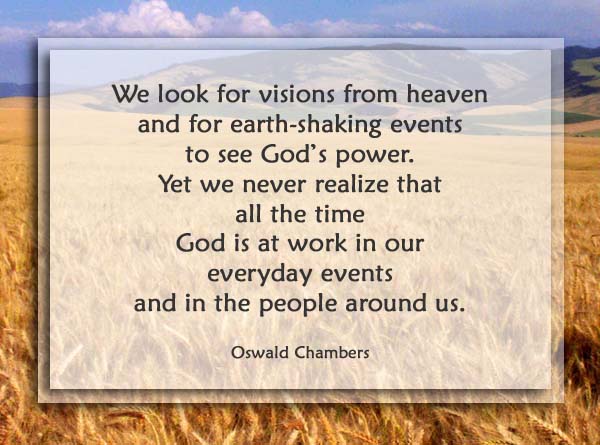
“We look for visions from heaven

and for earth-shaking events

to see God’s power. . . .

Yet we never realize that

all the time God is at work

in our everyday events

and in the people around us.”


Write your stories!


Tuesday, November 29, 2022

Back to Basics: Connecting the dots of your life


If you’re a newcomer here at SM 101, you’ll soon recognize that I urge memoirists to connect their dots. Among other benefits, connecting your dots will help you with your story arc. (If you missed recent posts on your story arc, click on Your memoir’s all-important story arc as well as Your memoir’s middle and end. And don’t miss Is your story arc eluding you?)


Connecting your dots is also important for you personally.


Because, you see, your memoir is a gift not only to readers,

but especially to yourself

In writing, you can look back,

connect the dots,

follow the bread crumbs,

and realize

maybe as never before

that God has pointed you toward destinations

He planned especially for you

good places,

even if they didn’t look good at the time.


Perhaps you’ll find yourself in Henri Nouwen’s words“In every critical event, there is an opportunity for God to act creatively and reveal a deeper truth than what we see on the surface of things. God can also turn around critical incidents and seemingly hopeless situations in our lives and reveal light in darkness.” (Discernment)


By “connect your dots,” I mean this: Search for the ways God was involved in arranging the key events of your life, and then identify the ways He strings them together—how He connects the dots.”


First, identify your dots:


  • interruptions that popped into your life,
  • disappointments, roadblocks,
  • surprises (good and not-so-good),
  • where you chose to get your education,
  • jobs you took,
  • people you met (including your future spouse),
  • houses you bought,
  • setbacks,
  • failures,
  • the birth of your children,
  • the death of a significant person,
  • a conversation with a stranger,
  • an accident or illness that changed your life,
  • major decisions you had to make,
  • meeting the person who’d become your best friend,
  • and everything having to do with your faith in God.


Look back—take as long as you need. Identify your dots, your turning points, those pivotal moments.


Once you’ve done that, string your dots together. What do they all mean in relation to each other?


What was God doing over the years to point you in the right direction? How did He use one “dot” to prepare you for the next “dot”? And then the next one? And what did He do to bring you to where you are today?


In her Bible study, Esther, Beth Moore writes, “If we could only see what is  happening around us in the unseen realm, our eyes would nearly pop out of socket. . . . So much that would thrill us lies beyond our sight. . . .” How exciting is that?!


That’s why memoirists must invest time in retrospection, make an effort to dig deeply into the past, connect the dots, string them together, and make sense of what happened in the past. Recognize how you became the person you are today.


Yes, that’s a lot of work—but, oh! The treasures you’ll discover!


String together all the ways God has been working out His good plans for your life.


“He’s weaving pieces together

that will tell of His faithfulness

when generations to come read the pages of your life.”

Kaitlyn Bouchillon


Never believe that the so-called random events of life

are anything less than God’s appointed order.

Be ready to discover His divine designs

anywhere and everywhere.”

(Oswald Chambers, My Utmost for His Highest)


Monday, June 6, 2022

Don’t miss the significance of everyday people and events


Often we memoirists think we should focus on the big incident, the momentous scene, the shocking episode—and they are important—but look for the treasures, perhaps hidden right now—within the everyday events and individuals in your past. They could hold more importance than you realize.


Oswald Chambers said, "We look for visions from heaven and for earth-shaking events to see God's power. Yet we never realize that all the time God is at work in our everyday events and in the people around us."


In writing your memoir, be deliberate: Make time to relive your experiences. ReflectExplore and examine the ways God was at work in your everyday activities and the people who surrounded you.


What was He doing?

What was He working out?


How did those events and people transform your life’s direction?


How did they change the end of your story?


And there you have it, your Tuesday Tidbit.


Happy writing!


Tuesday, March 9, 2021

Your sobbing, wild-eyed, gasping leaps of faith


What leaps of faith have you taken?


I’m talking about a heart-stopping, bawling, howling plunge into the unfamiliar—with God.


A breath-taking, blubbering, dive into the untried, the unproven—with God.


I wince when I type the phrase “leap of faith” 

because its overuse has stolen its intensity, its radicalness.


Let's be clear: I’m talking about faith that calls you to hurdle yourself over the edge—blindfolded, shrieking—into the unknown, with God.


You have no guarantee things will work out—at least not in the way you hope. Or the way you plan.


You can only begin to imagine what surprises await you.


You wonder how you’ll hold up, or if you’ll even live through it.


You feel the last-minute doubts, the dread, the teeth-gritting, the labored breathing.


The heart-racing, stomach-knotting, head-spinning terror.


The throbbing, queasy feeling of being out of control.


You know only three things:


  1. God asked you to do something way beyond your abilities and comfort zones, something that scares you out of your wits and makes it hard to sleep at night.
  2. Everything within you cries out, “I must do this. I cannot not do this.”
  3. God, who is trustworthy, will be with you every moment.


What screaming, wild-eyed, gasping leaps of faith have you taken?


What did God teach you through it?


What did you learn about yourself?


What did you learn about God?


In what ways did the experience strengthen your faith?


I think your children and grandchildren 

need to hear your story, don’t you?


Get busy and write!

And have fun!


Tuesday, January 19, 2021

Your life: holy threads, consecrated strands, hallowed fibers, blessed filaments

Your job, as a memoirist, is to do the hard work of discerning and writing about "the designing hand of God and his intervention in our lives" (Ravi Zacharias).

Think about God's footprints alongside ours, His fingerprints all over our lives: Divine intervention.

Sounds good, doesn't it? We like having God intimately involved in our lives.

But " . . . divine intervention is nowhere near as simple a thing as we might imagine," writes Ravi Zacharias (Grand Weaver: How God Shapes Us Through the Events of Our Lives). 

Think about this: 

Sometimes our footprints, and those alongside ours, are muddy, or worse.

Sometimes tattered, holey shoes left those footprints.

Sometimes God's fingerprints all over our lives are sticky, smudged, scarred, bloody. Sometimes the fingerprints we leave behind are, too.

Divine intervention "cannot be only a journey of unmistakable blessing and a path of ease," Zacharias continues. "To allow God to be God we must follow him for who he is and what he intends. . . ."

Each of us has countless blessings and yet, each of us has experienced heartaches, disappointments, failures.

Sometimes life knocks the air out of us.

Too many experience betrayal. Unfaithfulness. Rejection. Abuse.

Some know hunger and sickness and handicaps and homelessness.

We know loss, grief, exhaustion, confusion.

Hopelessness. 

At such times we can be tempted to despair, thinking God doesn't love us enough, or that His plans for us are not good enough. We think we deserve better from Him.

Other times our lives seem hum-drum. We're boring people living boring lives. We wonder if we matter, if we are worth anything of value.

". . . Incident follows incident helter-skelter leading apparently nowhere," Frederick Buechner writes, "but then once in a while there is the suggestion of purpose, meaning, direction, the suggestion of plot. . . ." (The Alphabet of Grace).

That's what Zacharias calls us to see: "the designing hand of God and his intervention in our lives" so that "we know he has a specific purpose for each of us and that he will carry us through until we meet him face-to-face. . . ."

Yes, sometimes life is overwhelmed with sadness, other times life is blah, but if we let Him, and work with Him, God uses all of it to shape and polish us, to mature us and beautify us, even though we might not understand it at the time, or even see it.

Zacharias challenges us to imagine our lives as exquisite fabric: vivid, brilliant colors with threads of gold and silver intertwined. He wants us to see God as the "Grand Weaver . . . with a design in mind for you, a design that will adorn you as he uses your life to fashion you for his purpose, using all the threads within his reach."

You are important to God. You are His workmanship, His treasure. Your life is sacred.

God is custom-making the fabric of your life. Look back over the years and search for each thread and color: the dark ones and the pastel ones, the heavy ones and the light ones, the coarse ones and the golden ones. Those are holy threads. Consecrated strands. Hallowed fibers. Blessed filaments.

Search. Make it your quest to discover the excellent, one-of-a-kind pattern the Grand Weaver is creating out of you.

Go back: Look for spools of thread, God-designed, for you alone. Watch and listen for the sound of the shuttle going back and forth in God's hand. He's making something beautiful: YOU.

The more you grasp

how important you are to God,

and that He's crafting you

into His masterpiece,

the better you can write

your God-and-you stories,

the better you can share them with

your children,

grandchildren, great-grandchildren,

and generations yet unborn. 


Tuesday, July 7, 2020

What stories could they tell?


“Stories are all around us,” writes Glenda Bonin.

“They reside in people, places and things, and are waiting to be discovered.”

So true.

Not just stories: God-and-you stories.

Take a fresh look at possessions you could never give away or throw out.

What do you store in a special drawer or safe deposit box?

What would you stash in a safe place if tornado sirens sounded? What would you grab if your smoke alarm went off?

Look around and identify something you’ve owned for years and use a lot.

If those items could talk, what would they tell?

I think about that question—a lot.

A few years ago I gave away a set of dishes to a family that lost everything in a fire. I tucked a note inside that read:

“I bought these dishes in Africa and we used them during our seventh and eighth years there, and here in the States all these years since then. While you use them, ask yourself, ‘If these dishes could talk, what stories would they tell?’”

Some day I want to write—I need to write—stories based on my old blue American Tourister carry-on bag (a gift from Schiefelbeins in 1993—thanks Rick and Marilyn!).

That bag has traveled with us for 27 years now—from this planet’s most primitive places to the world’s most sophisticated cities. What stories it could tell! Not just stories, but God-and-me-stories.

What stories could my husband’s grandmother’s aluminum colander tell? My mother-in-law passed it on to me 53 years ago. And yes, it could tell stories—stories about five generations so far. My daughter has asked me to pass it on to her eventually. Who knows how many more generations will tell stories about it?

Look at your dining room table. Ask yourself, “If it could talk, what stories would it tell?” (Click to read two of my posts, Vera Bachman’s Table, and Your dinner table memories.)

“If these old boots could talk, what stories would they tell?” (See my recent post about my safari boots at The dust of Africa had penetrated my skin pores and entered into my soul.)

If your old Bible could talk, what stories would it tell?

What about a photo? A photo album? A book?

A washing machine?

A piece of art? Jewelry? A scarf?

Your dad’s old hat?

Your mother’s old coffee mug?

Your grandmother’s rocking chair?

Your old high school yearbook?

“Don’t be timid about interviewing yourself and others,” continues Glenda.

“A good interviewer asks questions and waits for answers. . . . Listen deeply, allowing as much time as needed for quiet moments of thought. Do not rush in with a new question until you are satisfied that the question has been fully explored.

“It is not unusual for one question to lead to another. . . . These moments are often where the best family stories can be found. . . .” (Glenda Bonin at Storyteller.net)

Remember: while you’ve been using and cherishing those items, God has been alongside you, working in you, working on your behalf.

Stories are all around. 
You don’t need news-making miracles 
to witness God at work. 
He is in your everyday comings and goings.


“We look for visions from heaven
and for earth-shaking events to see God’s power.
Yet we never realize that all the time
God is at work in our everyday events. . . .”

Write your stories!
Leave a legacy for your kids, grandkids, 
and great-grands!


Tuesday, June 23, 2020

Your daily life: “Imagine the divine activities behind the scene”


In her Bible study, Esther, Beth Moore suggests that we “imagine the divine activities behind the scene[s].”

Those few words remind me of my challenge to all you memoirists writing stories with a spiritual dimension. You’ll often hear me say, “Connect your dots.

By “connect your dots,” I mean this: Search for the ways God was involved in arranging the key events of your life, and then identify the ways He strings them togetherhow Heconnects the dots.”

Beth continues, “If we could only see what is  happening around us in the unseen realm, our eyes would nearly pop out of socket. . . . So much that would thrill us lies beyond our sight. . . .”

Beth writes that God sometimes appears in the midst of a crisis “dressed in the best disguise of all: ordinary events. He tucks a miracle in the folds of His robe and sweeps in and out unnoticed.

Only in retrospect do we realize that a divine visitation graced our cold, crude winter and the resurrection of spring is on its way.

“Sometimes we grab the hem of Christ’s garment for dear life. . . . Other times it brushes past us and we never recognize that the turn-around marking the months to come began with a single touch.”

She calls those events “so forgettably ordinary.”

So forgettable. So ordinary. Sigh.

That’s why memoirists must invest time in retrospection. That’s why memoirists must set aside time and make an effort to dig deeply into the past, to uncover, piece together, connect the dots, and make sense of what happened in the past.

Yes, that’s a lot of work—but, oh! The treasures you’ll discover!

Amy Carmichael wrote of new insights she received one day in reading Deuteronomy 11 when God was sending the Israelites to the land of milk and honey with the promise that “the eyes of the Lord your God are continually on [the land] from the beginning of the year to its end” (vs 12).

Amy wrote, “‘From the beginning of the year until the end of the year’—much is folded up in that. The day of the week, the hour of the day, every minute of the day, not one is outside His care.” (Edges of His Ways)

Think on those words
while you reflect and ponder and piece together your story—
while you connect your dots.
From the beginning to the end, God’s eye is on you.
Every minute.


“Never believe that the so-called random events of life are anything less than God’s appointed order. Be ready to discover His divine designs anywhere and everywhere.” (Oswald Chambers, My Utmost for His Highest)


Tuesday, August 28, 2018

Tuesday Tidbit: Don’t miss the significance of everyday people and events


In writing your memoir, make time to relive your experiences. Be deliberate.


Explore and examine the ways God was at work in your everyday activities and the people who surrounded you.

What was He doing?
What was He working out?

How did those events and people transform your life’s direction?

How did they change the end of your story?

Often we memoirists think we should focus on the big incident, the momentous scene, the shocking episode—and they are important—but look for the treasures, perhaps hidden right now—within the everyday events and individuals in your past. They could hold more importance than you realize.

And there you have it, your Tuesday Tidbit.

Happy writing!


Tuesday, February 27, 2018

Tuesday Tidbit: Writing about prayer doesn't need to be stodgy or stuffy or boring


Did your heart make a little skip when you read Thursday’s post—about including stories about prayer in your memoir? I hope so. Such stories can be powerful for your readers.

Stories about prayer can:
  • encourage readers to pray themselves,
  • watch for God’s answers,
  • enrich their relationship with God in infinite, eternal ways,
  • and change their lives!

Stories that include prayer don’t need to be stodgy. Or stuffy. Or boring.

They can include humor, suspense, play, adventure, joy, drama, science, and all kinds of lively, fascinating, exciting stuff.

The following quotes will bless you and, I hope, inspire you to write those stories that include something about prayer.

“Prayer is … putting oneself in the hands of God … and listening to His voice in the depth of our hearts.” Mother Teresa

“It is impossible to carry on your life as a disciple without definite times of secret prayer. Prayer is not simply getting things from God—that is only the most elementary kind of prayer. Prayer is coming into perfect fellowship and oneness with God.” Oswald Chambers, My Utmost for His Highest

“Prayer is the heart of fellowship with God. In it we open our total self to God in adoration, confession, thanksgiving, and supplication. Prayer is communion with God in which He speaks to us through the thoughts engendered in our minds and the decisions of our wills. How wonderful: we can share life with the Lord and Creator of the universe!” Lloyd John Ogilvie, God’s Best for My Life

Teaching kids, grandkids, and others about prayer
is one of the most important things you can do.

Your prayers, and your memoir, can outlive your life.


And there you have it—your Tuesday Tidbit.