Tuesday, February 15, 2022

Pin down inner qualities that define your memoir’s main characters


The people in your memoir, the ones who shaped your life, for better or for worse, are the people your readers want to know.


Last week looked at developing your main characters from a sensory perspective (sight, sound, smell, feel, taste), and this week we’ll dig even deeper and tackle what’s even more important—we’ll work on your main characters’ inner qualities. (If you missed last week’s post, click on Write life into your memoir’s main characters.)


Readers want to feel like they are alongside you, looking into the same faces you’re looking into. They want to experience what you experienced, hear what you heard, feel what you felt. They want to feel familiar with your main characters.


To achieve that, you need to go beyond a physical, sensory description: Develop a multi-dimensional person.


Which specific dimensions of your main characters significantly impacted you?


  • What mattered most to her?
  • What did he believe was his life’s purpose? What did he live for? What motivated him?
  • What were his values?
  • Her convictions?
  • Was he selfless or selfish?
  • Touchy or grace-giving?
  • Faithful or fickle?
  • Patient or impatient?
  • Forgiving or bitter?
  • Brave or cowardly?
  • Nurturing or aloof?
  • Confident or insecure?
  • Gentle or abrasive?
  • Generous or stingy?
  • Was she domineering?
  • Was he humble?
  • Was he quick-tempered?
  • Was she arrogant?
  • Manipulative?
  • A peacemaker?
  • What was endearing about her?
  • Annoying about him?
  • Comical, scary, heroic?
  • What did she obsess over? And was that a good or bad obsession?
  • What did others say or think about that person?


For example, Frederick Buechner writes, “Like her father, my grandmother had little patience with weakness, softness, sickness. Even gentleness made her uncomfortable, I think—the tender-hearted people who from fear of giving pain, or just from fear of her, hung back from speaking their minds the way she spoke hers.” (The Sacred Journey)


A word of caution: Readers don’t need to know everything about your main characters.  As Roy Peter Clark says, “To bring a person to literary life requires not a complete inventory of characteristics, but selected details arranged to let us see flesh, blood, and spirit.” 


Know what information to include and what to exclude.


For example, if your memoir focuses on your grandmother’s commitment to nurture her kids and grandkids, develop her from that perspective. Readers probably don’t need to know that she struggled with insecurity or impatience or lack of courage.


Peel back layers. Readers want to know what was happening between the lines. What was happening beneath and beyond the sensory details? What was going on inside? What were that person’s thoughts?


You don’t need to flesh out every person in your memoir, but readers want to feel connected to your main characters. Your job is to create realistic characters—to accurately portray those most important people without overdoing it.

What was it about the person’s beliefs,

goals,

fears,

experiences,

successes,

failures,

quirks,

character

or values

that impacted your life?


Revise and polish your memoir in those places

where your main characters need to come to life.


Develop characters your readers can visualize,

but go beyond that:

Create living, breathing, vibrant,

memorable characters

people who are believable, knowable, and well-rounded,

people readers can relate to.


Tuesday, February 8, 2022

Write life into your memoir’s main characters


Invite readers into your memoir by bringing life to key people in your stories.


Roy Peter Clark, one of my favorite writing mentors, says:


“In the best of cases—when craft rises to art—the author conjures a character that seems fully present to the reader, a man standing against that very light post waving you over for a conversation.” (“Keeping it real: how round characters grow from the seeds of detail”)


I like that: characters that seem “fully present for the reader.”


Write so the central characters become more than a shadow in the corner.


Develop your main characters so readers feel they’re in the scene, reliving your experiences and conversations alongside you.


That’s often easier said than done.


In his webinar entitled “They Walk! They Talk! Secrets to Writing Engaging Characters and Vivid Dialogue,” Dinty Moore said:


“Characterization in memoir is always a challenge:

how can we make the people we know

feel as real and alive for readers as they do for us?

As writers, we must remember that our readers

have never met the people in our memoir;

they know only what we tell them.

And sometimes, we know our characters—

family, friends, enemies—

so well that we forget we need to introduce them

in all their complexity. . . .”


How do you make your main characters feel real and alive? By including specific details about them.


For starters, pay attention to sensory details. If your reader had stood with you in the presence of that person—a pastry chef, for example, or a dairy farmer—what would your reader have seen, smelled, felt, heard, and tasted?


Think about sitting on your dad’s lap when you were a little kid. Did you smell his aftershave? Or the beer on his breath?


Kathleen Pooler, in her vignette Seeds of Faith, writes of the smell in her great-grandmother’s room: “I sat on the edge of the bed and she pulled me close. . . . ‘God bless, God bless,’ she whispered. The musty scent of age lingered as she gently rubbed my back.”


Kathleen also writes, “Her tiny hands felt smooth, like a soft leather glove.”


Let your readers in on a person’s idiosyncrasies and gestures. Did she live life at a half-run, or did she plod through life? Did he make people uncomfortable by standing too close when he talked to them? Did he make a funny little noise in his throat when he was nervous?


Incorporate a person’s facial expressions. What did your boss’s eyes look like when he was mad at you?


When you hid in the woods and smoked cigarettes after school, how could you tell, when you got home, that your mother had already found out? What did her face look like—her eyes, her mouth? Did her nostrils flare? What was her voice like? Did she yell, or did she give you the silent treatment? Did she pinch your ear? Did she cry? Or laugh?


Look over your rough drafts and 

breathe life into your memoir’s main characters.


Pull your readers closer . . . into a sensory world

that you and your readers can inhabit together.

(Judith Barrington, Writing the Memoir)


Tuesday, February 1, 2022

Tuesday Tidbit: We will die one day, and what will we leave behind?


“We will all die one day. That is one of the few things we can be sure of,” Henri Nouwen wrote.


“But will we die well? That is less certain,” Nouwen continued.


“Dying well means . . . making our lives fruitful for those we leave behind. The big question . . . is . . . ‘How can I prepare myself for my death so that my life can continue to bear fruit in the generations that will follow me?’ . . . .


Dying can become our greatest gift if we prepare ourselves to die well.” (Henri Nouwen, Bread for the Journey)


Let’s think about what Henri said.


If you’re like me, you’re concerned about influences on your kids, grandkids, and great-grands—influences that lure them away from your best hopes and dreams and prayers for them. Away from God’s best for them.


Less-than-stellar influencers bombard young people, enticing them to live and believe in ways that could diminish them morally, spiritually, personally, mentally, and relationally.


Today’s kids are listening to the stories of movie stars, athletes, singers, podcasters, comedians, the press, educators, politicians, authors, friends, and paranormal characters in books and movies.


If you worry about the stories your kids, grandkids, and great-grands listen to, how about telling them your stories?


There’s a good reason the Bible is full of stories. There’s a reason Jesus told parables.


Never doubt the power of stories!


Kathy Edens writes,

“Research proves that stories and anecdotes

help people retain information better.

Forbes reported most people only remember

about 5-10% of statistics you cite.

But when you accompany your stats with a story,

the retention rate bounces up to 65-70%.


Wow! Did you know that? That’s impressive. Read that again!


That means that if you want to teach your grandkids the importance of telling the truth, you can tell them, “It’s important to always tell the truth, and you can get yourself into tons of trouble if you lie,” but your words will probably go in one ear and out the other.


OR, you can tell them a story

a story of how you, or someone you know,

learned the importance of honesty,

and the consequences of dishonesty.


Your stories can teach your kids, grandkids, and great-grands many important things—about keeping a commitment, being faithful, working hard, being kind.


Your stories can teach them to handle tragedies with tenacity and faith.


Your stories can help them choose courage over fear, generosity over stinginess, compassion over meanness, thankfulness over ingratitude, and so much more.  


 “The world’s greatest wisdom passes through stories,” writes Kathy Edens.


Think about what Kathy says:

The world’s greatest wisdom

can flow through your stories!


There’s a good reason Jesus said,

Go tell your family everything God has done for you.”

(Luke 8:39)


Remember what Henri Nouwen said: We need to prepare ourselves so that after we die, our lives, experiences, and faith will continue to bear fruit for future generations.


Dying can become our greatest gift if we prepare ourselves to die well.” (Henri Nouwen, Bread for the Journey)


That means you need to tell your stories!


There you have it, your Tuesday Tidbit.


Tuesday, January 25, 2022

Tuesday Tidbit: Your memoir’s takeaways can change lives


Where do you put takeaways in your memoir? (If you missed last week’s post on what takeaways are, click on Your memoir’s all-important takeaways.) 


Takeaway happens within a reflection,” point out Brooke Warner and Dr. Linda Joy Myers. (To read more about the importance of reflection in memoir, click on Reflection and the words we use.)


“Takeaway can be a reflection, but not all reflection is takeaway,” they continue. “… [W]herever there is reflection, there is an opportunity for a takeaway, but that doesn’t mean that necessarily all reflections are going to be takeaways.”


In other words, takeaways accompany segments in your memoir in which you reflect. You will reflect multiple times throughout your memoir. Some if not all of them will be opportunities for you to include a takeaway for your readers—those bits of wisdom to live by.


And don’t beat around the bush! Pinpoint your message. Clarity is your goal. (Please, please, read my blog post about writers who circle all around The Point but never state The Point. Click on What’s the point?)


Dedicate quality time to crafting your takeaways. Specify what was the most important message or lesson you took away from that experience (the one you’re reflecting on). Boil it down, write a concise message for your readers.


Here are examples of takeaways:


“Life is composed of cycles and seasons. Nothing lasts forever.” Dr. Henry Cloud


“Courage doesn't always roar. Sometimes courage is the quiet voice at the end of the day saying, 'I will try again tomorrow.'" (Mary Anne  Radmacher


“We find by losing. We hold fast by letting go. We become something new by ceasing to be something old.” (Frederick Buechner)  


In this example from Steve Pemberton’s A Chance in the World, I’ve underlined the takeaway: “Looking back, this was a galvanizing moment. The Robinsons had taken away any semblance of my childhood, something I could never get back. But now this new edict, vile and ignorant, threatened my future. At some point in our lives, we all have to make a decision to take a stand, knowing full well the potential harmful consequences. For me that decision came in the fall of 1982, at the age of fifteen.”


Most memoirists place takeaways throughout their memoirs. If you have a conclusion, a postscript, or an epilogue in your memoir, reiterate your most important takeaways in them, too.


Your takeaways are the most powerful part of your memoir.

They offer readers hope,

or wisdom, or courage, or laughter,

or a solution, or a new way of living or loving.


Your takeaways, then, communicate to readers:

“I know this is true because I have experienced it,

I have lived it. It changed my life.

Perhaps it will change your life, too.”


At first your takeaways will resemble diamonds-in-the-rough. Your job is to cut and polish and make those gems sparkle. Doing so adds to their value for both you and your readers.


There you have it: Your Tuesday Tidbit.


Tuesday, January 18, 2022

Tuesday Tidbit: Your memoir’s all-important takeaways


People will read your memoir for its takeaways.


What’s a takeaway?


It’s a gem you unearthed during all your remembering and reflecting that’s so important in writing a memoir. (Be sure to read our earlier post, “Dig out the gems, in pieces if you must.”)


In examining what you unearthed, and in re-evaluating it, you gained clarity and wisdom, and that helped make sense of your lifewhich you offer to your readers.


Takeaways are what readers “take away” from your memoir. A takeaway is a meaningful sentence or two that speaks to something deep inside the reader.


He recognizes himself in your story. When he stumbles upon your takeaway, he will pause to think, to re-read the words, slowly. He might underline the passage. Or maybe highlight it. Or write notes in the margin. Your memoir’s takeaway offers him lessons he will carry with them after he’s read the last page and closed the back cover.

How do you, the writer,

discover a takeaway in your life’s story?


Think back. At some point,

you had an A-ha moment, and a light came on.

Puzzle pieces began falling into place.

You gained clarity.

You discovered a solution.

It was a turning point.

You were not the same person after that.


That’s good, that’s exciting.

Such discoveries can be defining moments for you,

life-changersbut go beyond that.

Share the benefits of that experience with your readers

by crafting a takeaway.

Offer them their own A-ha moment.

Offer them something of value.


In other words, in a concise way give words to the principle you learned—think of the takeaway as a precept, a saying, a guideline, an adagesomething readers can live by, a principle that can be life-changing for them, too.


Use your takeaway to offer readers hope,

or wisdom,

or courage,

or laughter,

or a solution,

or a new way of living or loving.


Your takeaways, then, communicate to readers: “I know this is true because I have experienced it, I have lived it. It changed my life. Perhaps it will change your life, too.”


Come back next week when we’ll continue working on takeaways.


There you have it, your Tuesday Tidbit.


Tuesday, January 11, 2022

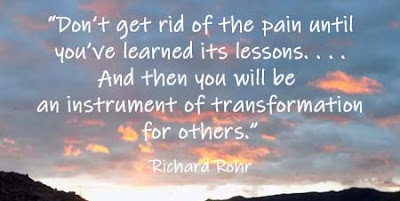
“Don’t get rid of the pain until you’ve learned its lessons”


As you reflect on the past and write your memoir, you’ll need to examine painful experiences.


Even “happy” memoirs

will include an element of sadness

or displeasure or ache.


That’s because even the happiest lives include

challenges, disappointments, and obstacles.


Life includes an unwelcome surprise or two.

Heartaches, too.


And some lives include terrible suffering.


Writing about painful happenings can be agonizing because it requires you to relive the experience.


From a spiritual angle, we’re often tempted to question God, asking Him “Why?”  


Why would He make me wait so long for relief from a desperate situation?


Why does He allow my children or parents or spouse to suffer?


Why does God seem so distant and uninvolved in my life?


Why doesn’t God love me enough to do something?


Why did He allow a loved one to die?


But writing can also bring healing if,

in the process of writing,

you look at the hurtful incident carefully, dissect it,

and try to make sense of it

in ways you might not have in the past.


Jenn Soehnlin offers good advice in her article, “When you find yourself asking God ‘Why?’”


For a long time, Jenn had been asking God “Why?”  But, she writes, “One day . . . God was telling me I was asking the wrong question.


What other question is there? I wondered.”


Jenn continues, “I didn’t get an answer right away, but when it came, it shifted my perspective.


The question to ask was not “why?” but “what?” with a heart to learn God’s heart.


“For example, ‘What do You want me to learn from this . . . ? What good do You want to come from this?”


She continues, “By asking ‘what?’ instead of ‘why?’ it puts God back on His throne.


“Asking ‘what?’ suggests humility, trusting God.


“Asking ‘why?’ suggests a hostility toward God’s character, that He isn’t really good or cannot really be trusted, or a belief that we know better than the Creator Himself.


“It requires . . . an intentional decision to trust that God is teaching us something,” Jenn says, “and that it is for our ultimate good and the good of others around us, that we can impact others with what we’ve been learning.”


Did you catch that last bit? It could be that God has allowed painful things to happen for your ultimate good (such as spiritual growth and personal maturity—such as knowing God better and loving Him more), and for the good of other people—through your memoir.


Jenn writes, “It makes hard times a little easier to bear, knowing that there is something to learn—and one day, to teach and encourage others from what we learned during our hard circumstances.”


Jenn’s words are so wise, so good.

That’s why I always link writing memoirs

to 2 Corinthians 1:3-4: “The God of all comfort . . .  

comforts us in all our troubles, so that

we can comfort those in any trouble

with the comfort we ourselves have received from God.”


Reflection is such an important aspect of writing a memoir—and such an important aspect of loving and serving God. Many times in Scriptures, God tells us to remember what He did in the past for us and our loved ones.


Reflection: A time for re-evaluating assumptions we made in the past, for taking a fresh look at conclusions we came to in the past. A time for asking God “what?” instead of “why?”


Don’t get rid of the pain

until you’ve learned its lessons.

When you hold the pain consciously and trust fully,

you are in a very liminal space.

This is a great teaching moment

where you have the possibility of breaking through

to a deeper level of faith and consciousness.

Hold the pain of being human

until God transforms you through it.

And then you will be

an instrument of transformation for others.”

(Richard Rohr, adapted from

The Authority of Those Who Have Suffered)


Tuesday, January 4, 2022

Tuesday Tidbit: You have 365 writing opportunities before you


Author and writing mentor Nancy Julien Kopp’s words

on New Year's Eve made my heart dance.

They brought me energy.

And a smile.


She said I could share them with you.

Prepare to be inspired!


“This next year gives us 365 opportunities,” Nancy writes.


Think what those 365 opportunities mean to those in the writing world. Wow! You have 365 days to pursue your craft in the best way you know how.


“Each day of the year is a gift that we’re given. It’s up to us to decide what to do with each one.”


Nancy continues, “If you’re a writer, writing should be somewhere on your daily plan.


“Some days will be filled with writing projects and anything related to them besides the actual new writing,” she said. “Research, editing, revising . . . come to mind.


Nancy asks, What are you going to do with these 365 opportunities?”


Nancy’s message reminds me of what Lee Roddy said:


An unfinished manuscript cannot change lives.

Even a finished one cannot minister

in a drawer or filing cabinet.”

(quoted in Marlene Bagnulls’ Write His Answer)


And finally, Nancy leaves us with this encouragement:


“Maybe today is a good day

to think about your goals for 2022.

What do you want to accomplish this next year?


“. . . For this next year,

I wish you joy in your writing world,

that you grow as a writer,

and that you have many successes.

Don’t forget that you have 365 opportunities

to accomplish all of them.

HAPPY NEW YEAR!


Thanks, Nancy, for the inspiration!


There you have it: Your Tuesday Tidbit.