Showing posts with label mourning. Show all posts

Tuesday, November 28, 2023

Part 2: What can you offer readers about mourning AND thanksgiving?


. . . . Continuing from last time: How can you write accounts in your memoir that embrace both mourning and thanksgiving?


For some of you, Thanksgiving brings back the pain of a heartbreak you endured in the past at this time of year.

  • Every time Thanksgiving rolls around, you remember the first time you had to look at that empty seat at the Thanksgiving table. And it’s still empty this year.
  • That special person’s favorite song keeps playing in your mind.
  • Or Thanksgiving always reminds you of the time you miscarried . . . again.
  • Or someone shot you, leaving you paralyzed from the waist down.
  • Your boss fired you and you saw yourself as a total failure.
  • You remember Thanksgiving as a time of enduring the unimaginable, when you were crushed in spirit, unable to shake the heaviness.


It was a situation you never could have predicted or would have chosen.


Since then, you’ve struggled

to find joy in the Thanksgiving season. . . .


And yet . . . . And yet . . . .


Now, looking back years later, you recognize that

there’s more to your story.

Something to be thankful for.


In some unexpected, surprising way,

not only did you survive, but now

you acknowledge the silver lining of your heartache.


You came out on the other side of your sorrow

thanking God for the blessings wrapped up in the hurts.


He brought beauty from your ashes:

He gave you the oil of joy—a joyous blessing—

instead of mourning,

and a garment of praise

instead of heaviness and despair (Isaiah 61:3).


That’s what you want to put in writing

for your family and friends.


How did it happen?


If you haven’t sorted through that already, I encourage you to do so.


Take time—make time—to examine the past. Be deliberate.


Peel back layers and discover what you hadn’t noticed before.


How, specifically, did you travel from grief . . .

 to anger,

and then to hope . . .

and then to some degree of healing?


I say “some degree of healing” because most of us, despite the mending and restoring and rebuilding, still have an ache in our hearts.


You might be saying, “But I still have scars!”


I understand. I still have scars, too.


But a scar is not the same as a wound.


A wound is an injury, a laceration, a blow, a rip, a break.


But a scar is

“a mark left where a wound or injury or sore has healed.”

(Oxford American Dictionary)


A scar is what you have after you’ve mended.

The bleeding has stopped. The scab has fallen off.


Instead of thinking of a scar as something damaged,

defective, or disfigured,

isn’t it better to see the scar as something that has healed?


Think of your scar as an emblem declaring you survived, as evidence of healing.


Take a good hard look at the way God answered prayers. You might not have detected them at the time, but looking back, you can clearly identify God’s specific answers.


Notice the people God brought into your life to shine a little light in your darkness.


What Bible verses popped off the page and gave you hope for the future?


  • Blessed are those who mourn, for they shall be comforted (Matthew 5:4).
  • The Lord is close to the brokenhearted, and He saves those whose spirits have been crushed (Psalm 34:18).
  • Those who go to God Most High for safety will be protected by the Almighty (Psalm 91:1).
  • He has put His angels in charge of you to watch over you wherever you go (Psalm 91:11).
  • They will call upon Me and I will answer them. I will be with them in trouble; I will rescue them and honor them (Psalm 91:15).
  • “I know what I am planning for you,” says the Lord. “I have good plans for you, not plans to hurt you. I will give you hope and a good future” (Jeremiah 29:11).
  • “At the right time, I, the Lord, will act. . . .” (Isaiah 60:22)
  • I give new life to those . . . whose hearts are broken (Isaiah 57:15b).
  • He heals the brokenhearted and binds up their wounds (Psalm 147:3).
  • Weeping may last through the night, but joy comes with the morning (Psalm 30:5b).
  • How long, Lord, must I call for help . . . ?  I will stand like a guard to watch . . . . I will wait to see what He will say to me; I will wait to learn how God will answer my complaint (Habakkuk 1:2, 2:1).
  • God knows where I am going. And when He tests me, I will come out as pure as gold (Job 23:10).


Note turning points or significant events.


During the early stages of what I call my personal 9/11, when I despaired of ever really living again, for some inexplicable reason I planted nasturtium seeds.


Shortly afterward, it occurred to me that that was a strange thing for a person to do who feared she might not survive. Would I live long enough to see those seeds sprout? Maybe even blossom?


Soon I was deeply moved by discovering that a seemingly insignificant activity—planting seeds—was an act of faith and hope for the future.


I clung to that tiny ray of hope day after day and, before long, nasturtiums began to bloom, and I was still alive, and the flowers were brilliant. Planting those seeds was a tiny but significant turning point for me—one of many.


Look at that green!

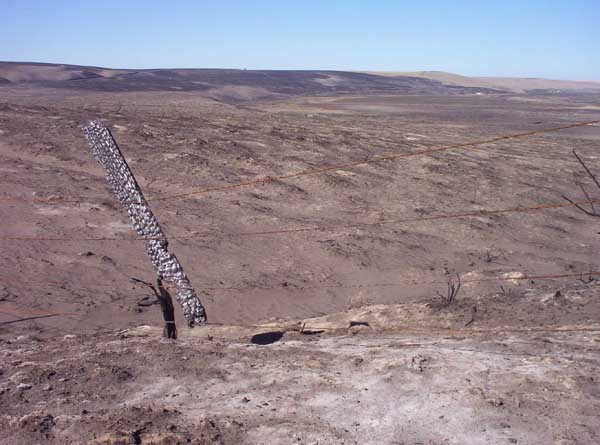
Let me tell you another beauty-from-ashes story. One day when my husband and I lived in eastern Washington, a wildfire raced through our part of the state, destroying mile after mile of crops, barns, farm equipment, and houses. In every direction, as far as we could see, the world was all ash.


But, to my surprise, a couple of days later I could see wee little green grasses sprouting up through the ruins. Mile after mile, I noted the lovely, hopeful green! My heart rejoiced! God had already begun the healing process. That, too, was a turning point for me.


What were your turning points, the pivotal moments?

Identify them as you write.


This next part is important:

Remember, your readers want to know

how you navigated

through your crisis

so they can do the same

when they go through their own unwelcome challenges.


They look to you as a role model.


You do that by including TAKEAWAYS for readers.


Do you remember what a takeaway is?


Next week we’ll cover takeaways. For now, work on your rough drafts, praying your way through the writing, and offering readers the gift of both mourning and thanksgiving.


Your story is going to be great! God is going to use it.


Tuesday, November 14, 2023

What can you offer readers about mourning AND thanksgiving?


Some of you remember a past Thanksgiving as a time of grieving. Heartache.


We tend to think of Thanksgiving as a joyous time, a warm time of enjoying loved ones and good food.


But memories of some Thanksgivings

might be just the opposite for you.


Perhaps a loved one was dying,

or you learned your cancer had returned.

Maybe someone dear to you committed suicide.

You lost your job.

Or your spouse left you.

Or an earthquake—

or hurricane or volcano or wildfire—

destroyed your town.


And now,

when Thanksgiving comes around each autumn,

you remember that season of sorrow.

And those memories hurt every time.


Five years ago this month, my daughter, son-in-law, and three grandkids somehow lived through an earth-shattering few weeks—along with hundreds of their friends and neighbors.


The Woolsey Fire started November 9, 2018, and burned for fourteen days, destroying almost 100,000 acres of the Santa Monica mountains and residential areas in Malibu along the Pacific Ocean. It would eventually destroy 1,643 structures.


Imagine them evacuating, driving away, fearing they’d never set eyes on their home again, wondering what could possibly remain of their close-knit community and of the church my son-in-law pastors. Imagine racing away, mile after mile, winds blowing flames out of control, and being overcome by enormous rolling clouds of smoke and ash.


No doubt you’ve experienced something

similarly destructive, emotionally or physically.

You know the ache, fear, alarm, hopelessness, panic.


And yet . . . And yet. . . .


Kaitlyn Bouchillon wrote of stepping into an unknown future, of having to “walk through what we never saw coming, walk among the ashes of what was or even, perhaps, will never be. . . .” (You know what that’s like.)


She wrote of shaky steps, unable to see more than one foot ahead, feet slipping. Of weariness, “slowly shuffling along for so long.”


And yet . . . looking back now,

Kaitlyn could see that was not the whole story.


Stacy L. Sanchez at Heartprints of God writes: “I have a question for you. What do you do when life doesn’t make sense? . . . When you are left with a million questions and not one single answer? What do you do?”


. . . “When we find ourself experiencing a trial or hardship, our humanness demands to know why. . . . Why me? . . . What did I do to deserve this? . . . Why would God allow this to happen? Why would a God of love let me suffer like this? Why didn’t God step in and do something to stop this?”


Stacy continues, “Our questioning only leads to feelings of confusion, anger, or despondency, not the answer we are so desperately seeking.


“. . . During a very low point in my life . . . day in and day out I kept pleading with [God] for an answer. I believed if I could just understand the ‘why’ behind what was happening, I would be able to deal with it, accept it, and move on.”


But, “God remained silent. For months I wrestled with my emotions and my God.”


What about you?


What do you remember

of being nearly paralyzed,

broken by an unwelcome blow?

You recognized life would never be the same again.

Wondered how you could live with the pain.

Feared the future.

Doubted you could keep placing one foot

in front of the other.


And God remained silent.


And yet, looking back now,

you recognize that was not the whole story.


Ponder that this week.


Your mind will be at work while you rake leaves

and bring woolens out of trunks

and stoke up the fireplace fire.

And while you plan your Thanksgiving menu.

Believe me, more and more details

will pop into your mind.

You still have time

before Thanksgiving’s hustle and bustle

to jot them down.

You’ll be glad you did,

and someday your friends and family

will thank you.


We’ll continue this next time—

because there’s so much more to your story.


For now,

be thinking about what you can offer your readers

about mourning—


but about more than that:

What can you also offer them

about thanksgiving—

about gratitude that eventually became

as life-changing

as the darkness?


Tuesday, December 22, 2020

Covid-19 and those “Beneath life’s crushing load”


Tragedies caused by Covid-19 can certainly be called one of life’s crushing loads. As of this morning, more than 1,700,000 people have died around the world. I estimate that for each one, at least fifty family members and friends are grieving. That number comes to 85,000,000 people mourning those deaths. That’s probably a low figure, and it will continue to grow.


Add to that financial disasters to businesses and employees, the enormous emotional and physical toll on first responders and healthcare workers, and people being evicted from their homes.


Add to that the isolation so many are experiencing from families at Thanksgiving and Christmas, teachers exhausted as they teach online instead of in person, and students struggling to keep up with their lessons.


Add to that careworn parents trying to work from home and supervise kids and help them with their schoolwork—all at the same time. Families are struggling financially because breadwinners have lost their jobs. Thousands every day wait in line for food. Others have enormous medical bills. Those recovering from the virus can have long-term health issues, making it difficult for them to get back on their feet.


And doctors and scientists are concerned over a sometimes-deadly syndrome related to Covid-19 which effects children’s “heart, lungs, blood vessels, kidneys, digestive system, brain, skin or eyes.”


Now there’s news that the coronavirus has mutated in England, and probably has reached other nations as well, and that the new strain spreads much more quickly than we’ve seen so far.


And that just scratches the surface when it comes to Covid-19.


In addition, in recent months our nation has experienced political unrest, violence in streets, racial tensions, and significant disagreements among Christian denominations.


That’s a lot of heartache to bear.


And I’m sure you’ll agree: All of this has added an element of sadness to this Christmas season.


In my family, we have our own layers of sadness, but really: We have little to complain about compared to millions of families that have many more problems than we do.


I ran across this artwork (see photo below) in an antique Christmas book and its caption took my breath away. “Ye, beneath life’s crushing load,” words from the beloved song, “It Came Upon a Midnight Clear.”


The words are so familiar to me—I’ve sung the song for as long as I can remember.


But this year, those words take on deeper meaning. I’m glad they caught my attention and jostled my heart and made me care more deeply.


Sometimes we want to block out the grimness of a time like this—we desperately want to ease our pain. We grab hold of distractions like Christmas parties and movies and music and decorations and gift-giving.


And yet, it’s good to step aside from our giddy Christmas festivities to pray for those suffering around us, in our nation, and around the world—those staggering beneath life’s crushing load.


But let’s go beyond that—let’s remember the suffering and sadness we have experienced in the past, and let’s remember the ways God stuck with us and got us through to the other side of the pain.


Remember the people He used, the Bible verses, the sermons, the stories He used to minister to us and keep us from going under.


Let’s always remember the good God brought to us within our past heartaches and sufferings. And then let’s comfort others with the comfort He has given us (1 Corinthians 1:3-4). How? By telling them our stories.


“Listen to your life,” wrote Frederick Buechner. “See it for the fathomless mystery it is. In the boredom and pain of it no less than in the excitement and gladness: touch, taste, smell your way to the holy and  hidden heart of it because in the last analysis all moments are key moments, and life itself is grace.” (Frederick Buechner, Now and Then)


Marlene Bagnull wrote, “I discovered the answers he [God] had given me could be a source of help and reassurance to others who asked . . . ‘How Much Longer, Lord?’ . . . I sensed the most difficult things for me to share could be the very words someone else needed to read.” (Marlene Bagnull, Write His Answer)


Which people did God use to comfort you when you were staggering beneath life’s crushing load? Thank God for them, (and thank them, too, if you can). Then pass it on: Share your stories with others.


Search your mind and heart for stories you need to include in your memoir, stories that will bless and encourage readers.


You don’t know what’s in the future—you can’t know now what will be happening in the lives of your kids, grandkids, great-grandkids, and all the others who will someday read your memoir.


Right now you can’t know what crushing loads your readers will be carrying.


But this is what you can do right now: Ask God to help you remember the good He brought out of your past heartaches and disasters. Dig deeply, layer by layer, and find the gems. Connect the dots.


Spend time recalling specifics of your situation,

Bible verses that made a difference,

God’s answer to prayers,

and people who loved you and stuck by your side.


And then, ask God to help you write your stories.

Ask Him to use them to give others

courage and hope and faith,

stories that will help them persevere

beneath life’s crushing load.


Tuesday, November 14, 2017

Tuesday Tidbit: “Mourning and thanksgiving together”


Some of you are grieving this Thanksgiving season: This post is for you.

I pray Michelle Cushatt’s words will comfort you:

“Your grief doesn’t lessen your gratitude.
It transforms it.
Tears turn an ordinary, two-dimensional Thanksgiving table
into a complex and glorious altar.
Dying and living,
mourning and thanksgiving, together.
Holy, fragile, beautiful.”

And while you process all of the above during this Thanksgiving season, and when the time is right, consider writing your stories. Use your words, your thoughts, your discoveries—your memoir—to do what MaxLucado says:


Tuesday, May 10, 2016

Tuesday Tidbit: Inviting others to the dance


Writing your memoir can help you step beyond your grief.
And when it does,
use your words 
to invite others to join in “the larger dance.”


“… As we dance, we realize that
we don’t have to stay on the little spot of our grief,
but we can step beyond it.
We stop centering our lives on ourselves.
We pull others along with us
and invite them into the larger dance.
We learn to make room for others—
and the Gracious Other in our midst.
And when we become present to God and God’s people,
we find ourselves richer.
We come to know that all the world is our dance floor.
Our step grows lighter because God has called others to dance as well….”


May your step grow lighter because
“God has called out others to dance as well,”
and He has invited you to play a role in that.


Wednesday, March 7, 2012

Beauty from your ashes


All this pain
I wonder if I’ll even find my way
I wonder if my life could really change at all
All this earth
Could all that is lost ever be found.…
(from the song “Beautiful Things” by Gungor)


You know the feeling. You’ve been there.


Betrayal. Natural disaster. Abuse. Unwelcome surprises. Ruin caused by your sin. Devastation caused by someone else’s sin. Tragedies. Heartaches.


You cry out, “God, can anything good come out of this? Will I even survive this?”


The next day, nothing is left,


...as far as the eye can see, mile after mile after mile,


...only ashes and soot remain.


But that’s not the end of the story.


Dear old Isaiah, the prophet, tells us that God transforms His people’s ashes—the ruin that remains after destruction—to beauty. He replaces their mourning with gladness. He converts their despair to praise. Isaiah says God will rebuild ruins and restore devastation (Isaiah 61:1-4).


I hope you know that feeling, too. Know it because you’ve been there. Know it because you are there.


“God deals with impossibilities. It is never too late for Him to do so, when the impossible is brought to Him, in full faith.…


“If in our own life there have been rebellion, unbelief, sin, and disaster, it is never too late for God to deal triumphantly with these tragic facts, if brought to Him in full surrender and trust.…


“God can ‘restore … the years the locusts have eaten’ (Joel 2:25); and He will do this when we put the whole situation and ourselves unreservedly and believingly into His hands. Not because of what we are but because of what He is. God forgives and heals and restores. He is ‘the God of all grace.’” (Sunday School Times, quoted in Streams in the Desert by Mrs. Charles E. Cowman, November 22 selection; emphasis mine)


God offers to pick us up, dust off ashes and soot, and bring us healing—even new life, even beauty. Look at these two photos. Do you see what I see?


Do you see it? Look closely.


In the words of Gungor’s song, “Hope is springing up from this old ground.”


What is your story? How did God accomplish the seemingly impossible in your life? How did he turn your ashes into beauty?


People need to know your story, so write it!


Your story will help readers think about their own lives. It can prepare them for sorrows that will inevitably arise in their lives.


Or, if they’re in the midst of a tragedy, you can assure them they’re not alone. They need to know that others before them experienced calamities, too, and that God did not forsake them. You can inspire them to hang on in faith until God brings them through on the other side, rebuilt and restored.


Writing your story is what 2 Corinthians 1:3-4 is all about:


“ … the God of all comfort … comforts us in all our troubles,
so that we can comfort those in any trouble
with the comfort we ourselves have received from God.”


God can use your story to help transform someone’s ashes to beauty, their mourning to gladness, their despair to praise (Isaiah 61:3).


Because life is hard, write your story.


Below are more excerpts from “Beautiful Things” by Gungor (you can listen to this song at this link:  http://www.newreleasetuesday.com/article.php?article_id=384)

You make beautiful things
You make beautiful things out of the dust
You make beautiful things out of us

All around
Hope is springing up from this old ground
Out of chaos life is being found in You.…

You make me new, You are making me new

You make beautiful things
You make beautiful things out of the dust
You make beautiful things out of us